Published May 1, 2026
As per-person plastic use rose twentyfold in three decades, civil-society organisations and GreenHub spoke up for enforcing Extended Producer Responsibility (EPR) — the power of collective action in shaping policy.
In Vietnam, plastic use increased 20-fold per person from 1990 to 2019, spreading concern about plastic pollution and inefficiency in waste management across the entire country. This problem is no longer confined to specific areas but has become a challenge that pervades the whole country.
Recognizing the urgent need to improve waste management, especially for packaging materials such as plastic, Vietnam has begun a journey to address this problem comprehensively. One prominent approach receiving widespread recognition is “Extended Producer Responsibility” (EPR).
EPR is an environmental policy framework that places full responsibility on the producer, not only during the product's use phase but throughout the product's entire life, including when it becomes waste. This approach fully aligns with the “Polluter Pays” principle, a fundamental principle set out in Vietnam's Constitution and environmental protection laws, especially Article 54 and Article 55 (amended in 2020) of the Law on Environmental Protection. EPR policy has proven effective in managing waste and reducing pollution in many countries such as South Korea, Taiwan, the European Union and the United States. It is increasingly recommended and considered in many countries around the world.
Given the urgency of dealing with plastic pollution and improving solid waste management, implementing an EPR law is hoped to be an important solution. This policy will not only help reduce plastic waste but also encourage responsible production and consumption, thereby steering Vietnam toward developing a cleaner and more sustainable future. In parallel, social organizations are also actively expressing their support for the drafting on plastics, emphasizing that the power of collective action and participation in shaping policy can bring benefits to both the environment and society.
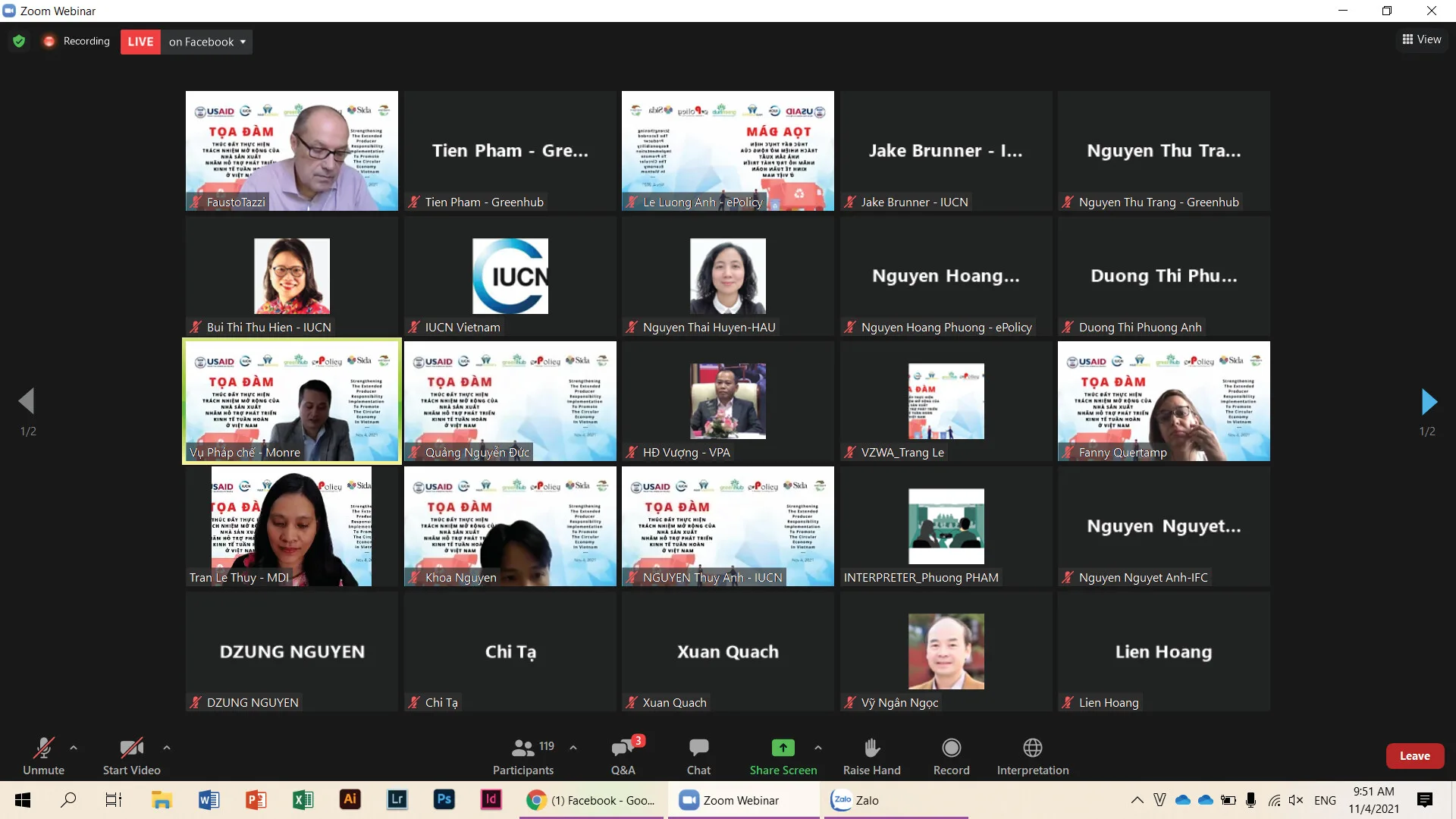
GreenHub promoted a group of non-profit organizations (NGOs) and science and technology organizations with the aim of petitioning for the enforcement of the EPR Decree. We jointly organized a community event under the theme “The urgency of implementing the EPR regulation (Extended Producer Responsibility) in the Decree guiding the Law on Environmental Protection 2020”. This event attracted the enthusiastic participation of 111 individuals and organizations, united in the common vision of a greener, cleaner Vietnam.
The power of collective action and community participation was demonstrated when we united in support of these important points. After being drafted, the petition letter was forwarded to the desks of central government agencies. But we did not stop there; our NGO group, equipped with scientific knowledge, continued to provide synthesized scientific information as evidence for the EPR regulations.
To promote the transition process along the existing momentum, GreenHub, with practical experience in the solid waste sector, coordinated with other organizations together with the Institute of Strategy and Policy on Natural Resources and Environment (ISPONRE) and the Legal Department - MONRE to conduct research and provide advice, thereby developing technical analyses based on international experience, effective ways to operate EPR registration and establishing an EPR Committee to oversee implementation. This analysis provided a valuable foundation and recommendations to support the EPR Decree.
In the journey to promote change, we harnessed the power of a “Petition Letter” sent to the Government and the National Assembly, meticulously drafted, to present four important points:
No Delay in Implementation: We called for there to be no postponement whatsoever of the EPR Decree, and that implementation must begin right from 2022.
Strengthening the Recycling Rate: We support applying a mandatory recycling rate and emphasize the accountability of producers.
Transparency and a Commitment to Accompany: We demand transparency about the role of environmental NGOs and consumer associations in the National Council on Extended Producer Responsibility, ensuring that they play an active role in monitoring EPR implementation.
Guidance on Financial Contributions: We emphasize allocating all financial contributions for EPR directly into recycling and waste treatment, thereby strengthening grassroots support for waste management.
To promote this transition, GreenHub, true to its practical experience in dealing with solid waste pollution, cooperated closely with other organizations and partners such as the Institute of Strategy and Policy on Natural Resources and Environment (ISPONRE). Together, we conducted thorough research and provided expert advice to develop analytical methods based on international experience, effective ways of operating EPR registration and establishing an EPR Council to oversee implementation. Our analysis and knowledge laid a solid foundation for preparing the enforcement of EPR, marking another step forward toward a sustainable and environmentally conscious Vietnam from a policy perspective.
On October 11, 2021, an important milestone marked recognition for efforts that had paid off. Our National Assembly responded strongly, requiring the Government and relevant ministries to accept two important proposals:
1. No Delay, Act Immediately: The EPR Decree should not face any delay; it needs to be implemented simultaneously with the Law on Environmental Protection 2020, taking effect before January 1, 2022.
2. Consumer associations need to be included in the National Council on Extended Producer Responsibility, enabling the voice of those directly affected by these regulations. This policy advocacy process highlighted the importance of the combination of civil society organizations (CSOs) to demand change. This is a process that needs to be supported by scientific evidence and the active participation of CSO groups in policy-development committees, such as the National Council on Extended Producer Responsibility.