Hai Chau District, Da Nang City
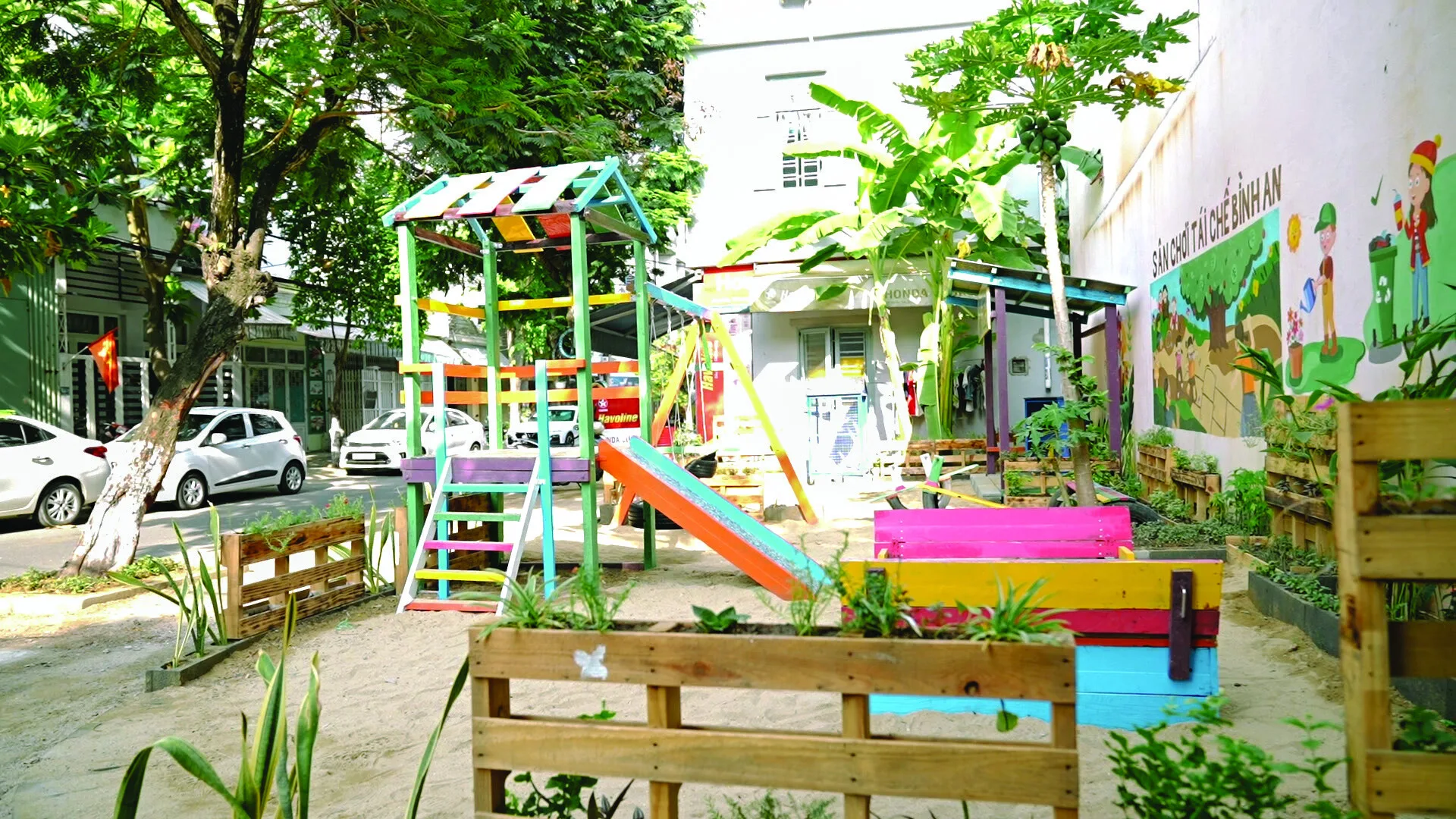
The urban residential area plastic-waste-reduction model is implemented in Da Nang City, piloted in Hai Chau district (Hoa Cuong Nam and Hai Chau 2 wards). The model mobilises the residential community to segregate, reduce, recycle and reuse plastic waste.
The process for building and implementing the urban residential area plastic-waste-reduction model (Da Nang City) comprises 5 steps: (B1) Assess and analyse the context; (B2) Build a plan and reach consensus; (B3) Organise implementation; (B4) Evaluate and adjust; (B5) Document and share.
(i) Compiling secondary materials. Waste-management data needs to be collected from stakeholders to provide an overview of the status of solid waste in general and plastic waste at the locality.
For example, at Hai Chau, the data on the total volume of domestic solid waste in the district in 2020 was 83,499.6 tonnes/year, per the report in Official Letter No. 1579/UBND-PTNMT dated 16/7/2021 on reporting the implementation of indicators in the Set of indicators assessing environmental-protection results in the city. In 2020, due to the impact of the Covid-19 pandemic, production and business activities were affected, so the waste volume in the year decreased.
Reference the average daily generation data for the 2015-2020 period per the report of Da Nang Urban Environment Joint Stock Company in Official Letter No. 695/MTDT-CNMT dated 05/10/2020 of Da Nang Urban Environment Joint Stock Company on providing information on solid-waste management in Hai Chau district.
The table compiling the volume of domestic waste in Hai Chau district for the 2015-2020 period comes from available data reported by the Hai Chau District Environment Enterprise, the unit directly performing waste collection and transport services in the district over the past period.
Review the status of segregation, collection and transport of solid waste after segregation in the residential areas.
From the results of the waste assessment and secondary-information analysis, the project team works with key stakeholders to discuss and confirm the issues to be addressed, while clarifying the needs and roles of stakeholders. Through meetings and exchanges, the model's objectives are identified and agreed among the parties. In the meetings, tools such as SWOT and stakeholder analysis are used to collect and analyse.
The District People's Committee organises a conference to deploy the Pilot Plan for building the plastic-waste-reduction Residential Area model and establishes the Core Group for advocacy and piloting the plastic-waste-reduction Residential Area model in Hai Chau district in 2022. From the District People's Committee's plan, the wards build plans suitable to local characteristics. The plan needs to identify the target area and subjects.
For example, at the 02 pilot wards participating in managing and reducing plastic waste in the 2021-2023 period of Hai Chau District, Hoa Cuong Nam and Hai Chau 2 wards proposed focusing support on building the plastic-waste-reduction Residential Area model over 01 year, then evaluating the pilot results and refining for scale-up. At other wards: support to strengthen advocacy, mobilising households to participate in segregating, reducing, recycling and reusing plastic waste.
Business, production and pioneer units may participate in pilot/demonstration-model activities. The pilot locality may propose selecting some establishments in the area such as cafés, restaurants, eateries and mini-supermarkets to participate in pilot plastic-waste management and reduction activities. This content is to identify specifically which business/enterprise participates, which will then require surveying and assessing needs, as well as clearly defining the coordination and specific participation among the parties.
In the joint action plan, the task of monitoring and evaluating implementation results is specifically assigned:
Stakeholders are identified through survey and consultation activities, sitting together to define the cooperation mechanism and the role of each party. The DoNRE is responsible for the overall coordination of activities on building the plastic-reduction residential-area model, issuing the implementation plan including the mechanism for cooperation and coordination among stakeholders including ward People's Committees, mass organisations, the consultancy unit and the project. Among these, the ward People's Committees are responsible for:
Organise training and communication to raise awareness for the participating community. Activities guiding waste segregation at source need to be designed to suit the subjects, especially the core collection groups in the Residential Areas.